
LIFEPAK 1000 Battery Replacement Kit (Non-Rechargeable)
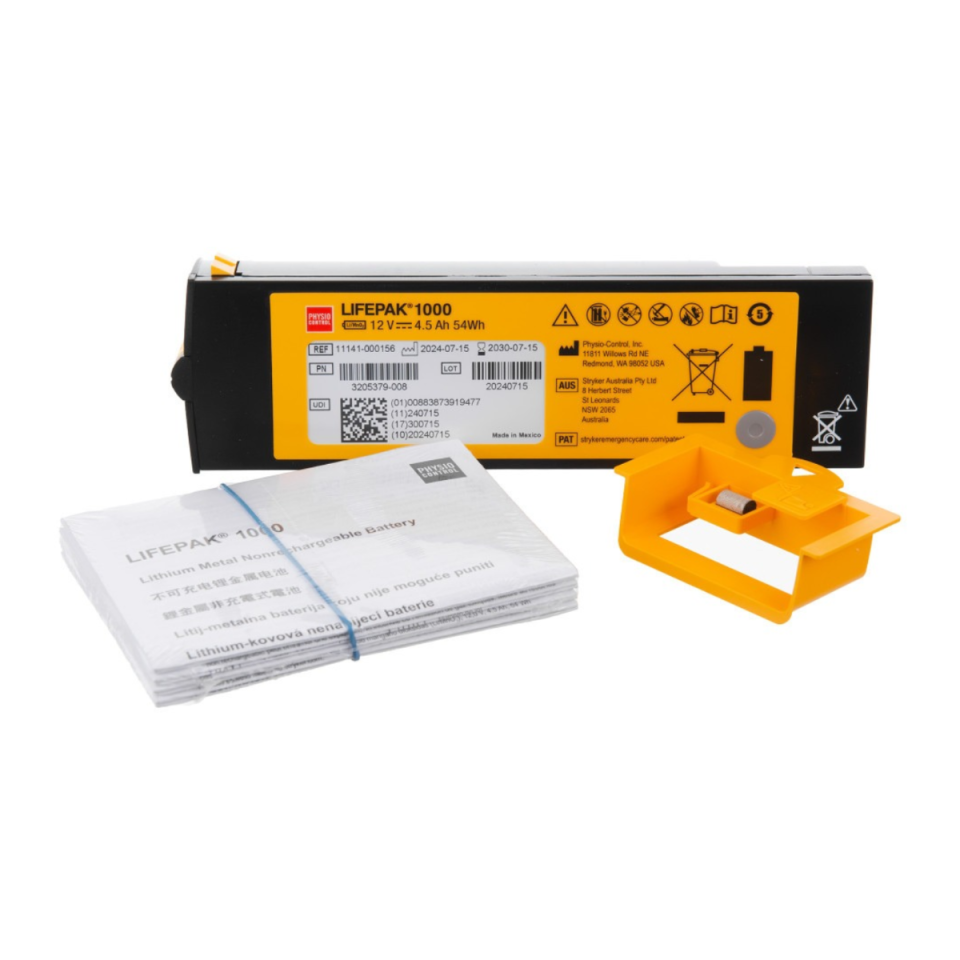
The LIFEPAK 1000 Battery Replacement Kit (Non-Rechargeable), part 11141-000100, is Stryker's battery kit for the LIFEPAK 1000 defibrillator, including a lithium battery and a discharger cap to safely dispose of your old battery. Fitted in an AED that is not used, it provides up to 5 years of standby power, and a new battery delivers up to 440 shocks at 200 joules. A built-in charge gauge shows how much charge is left before you fit it.
Key features
- Genuine Stryker battery for the LIFEPAK 1000, part number 11141-000100
- Up to 5 years of standby power in an AED that is not used
- Up to 440 shocks at 200 joules, or about 17 hours of use, when new
- Built-in charge gauge: four green lights show the battery is full
- Manufacture date and install-by date printed on the label
- Early warning: at least 30 shocks or 75 minutes of use remain when the AED first warns that the battery is low
What's included
- 1 x LIFEPAK 1000 non-rechargeable lithium battery
- 1 x discharger cap, to discharge your old battery safely before disposal
- Manufacturer's instructions
If you need more information, please call 01298 872186 or use the live web chat function. Our team will be happy to assist you.
Specifications
|
Specification |
LIFEPAK 1000 Battery Replacement Kit (Non-Rechargeable) |
|---|---|
|
Manufacturer part number |
11141-000100 |
|
Compatible with |
LIFEPAK 1000 defibrillator (Graphical Display and ECG Display models) |
|
Standby life |
Up to 5 years, fitted in an AED that is not used |
|
New battery capacity |
Up to 440 shocks at 200 J, or 1,030 minutes (about 17 hours) of use |
|
Shelf life before fitting |
5 years if stored at 20 to 30°C |
|
Type |
Lithium manganese dioxide (Li/MnO2), non-rechargeable |
|
Voltage and capacity |
12.0 V, 4.5 Ah (54 Wh) |
|
Storage temperature |
20 to 30°C |
|
Weight |
0.45 kg |
Key features explained
How long will the battery last?
- Fitted in an AED that is not used: up to 5 years. The AED's daily and monthly self-tests use a little charge, and every use shortens this.
- In a rescue: a new battery delivers up to 440 shocks at 200 joules, or about 17 hours of use.
- On the shelf before fitting: up to 5 years at 20 to 30°C. A battery stored for the full 5 years still gives about 4 years of standby once fitted.
How do I check how much charge is left?
Before fitting the battery, press the round grey button on the battery label, just below the battery symbol. The lights in the symbol show the approximate charge:
|
Lights |
Charge |
|---|---|
|
4 |
More than 75% |
|
3 |
More than 50% |
|
2 |
More than 25% |
|
1 |
25% or less. Replace the battery |
|
1 flashing |
Very low. Replace the battery immediately |
A new battery should show all four lights. Once the battery is fitted, the readiness display on top of the AED shows a battery symbol when the AED is off. When only one bar shows, the battery is low and should be replaced.
How do I know how old the battery is?
The battery label shows two dates. The date next to the factory symbol is when the battery was made. The date next to the hourglass symbol is the install-by date: fit the battery in the AED before this date. If you keep a spare, check its install-by date so it is still in date when you need it.
How do I fit and remove the battery?
- Keep the pads connected. Leave the electrodes connected to the AED throughout the battery change.
- Check the new battery. Press the round grey button on the battery label, just below the battery symbol. All four lights in the symbol should come on.
- Remove the old battery. The battery sits at the bottom of the left-hand side of the AED. Lift the latch to release it, then slide the battery out.
- Inspect the battery well. Look for damage, bent pins or debris on the contacts. If any pins are bent, do not fit the battery, and contact us for service.
- Fit the new battery. Push it into the battery well until it clicks into place.
- Check the readiness display. While the battery is out, the battery and service symbols show. Once the new battery is fitted, the AED resets the display. Confirm the OK symbol appears. If it does not, call us on 01298 872 186.
What is the discharger cap for?
The kit includes a plastic discharger cap for your old battery. Once the new battery is fitted, cover the old battery's terminals with the discharger cap. It drains the remaining charge so the battery can be recycled safely, and it stops metal objects touching the terminals, which could cause a short circuit. Follow the discharger instructions supplied in the kit, then take the old battery to a battery recycling point or book our collection service.
Will it fit my LIFEPAK 1000?
This battery fits every LIFEPAK 1000 defibrillator, including earlier units branded Medtronic or Physio-Control. It fits both the LIFEPAK 1000 AED with Graphical Display and the LIFEPAK 1000 AED with ECG Display and Manual Override. It is designed only for the LIFEPAK 1000, so it does not fit other LIFEPAK AEDs.
Why use a genuine Stryker battery?
Stryker states that batteries from third-party suppliers are not tested, verified or certified by Stryker for use with LIFEPAK devices. The LIFEPAK 1000 operating instructions also warn that batteries from other manufacturers may cause the AED to perform improperly. This battery is the Stryker part specified for the LIFEPAK 1000.
Frequently asked questions
Can the LIFEPAK 1000 battery be recharged?
No. This is a non-rechargeable lithium battery. Attempting to recharge it can cause a fire, an explosion or the release of harmful gas. Replace it when it runs low.
When should I replace my LIFEPAK 1000 battery?
Replace the battery when the readiness display shows one bar or fewer, when the AED shows a REPLACE BATTERY message, or when a single light flashes on the charge gauge. In an AED that is not used, plan to replace it within 5 years of fitting. Note the date you fit the battery, for example in your AED checklist, and add 5 years to get an approximate replacement date. Any use, or a long time in storage before fitting, brings that date forward. Our free reminder service can track it for you. After a rescue, check the charge, as every use shortens the battery's life.
Does cold weather affect the battery?
Yes. At 0°C, a new battery delivers up to 370 shocks or 900 minutes of use, compared with 440 shocks or 1,030 minutes at room temperature. Higher temperatures make the battery lose charge faster during storage. The AED is designed to operate from 0 to 50°C.
Why does the wrench symbol show after changing the battery?
The battery and service symbols appear on the readiness display while the battery is removed. Once the new battery is fitted, the AED resets the display and the OK symbol should return. If the wrench symbol stays on, check if the pads are out of date; if not contact us for service.
How do I dispose of my old LIFEPAK 1000 battery?
AED batteries are lithium-based and must not go in general waste. Before disposal, Stryker advises fully discharging the old battery using the discharger cap supplied with your new battery. Then take it to a battery recycling collection point. Most supermarkets have a collection bin near the entrance, and local authority recycling centres accept them. Use Recycle Now to find your nearest drop-off point.
Can you collect my old battery?
Yes. We offer a collection and disposal service for defibrillator batteries at £32 + VAT. Call us on 01298 872 186 to arrange it. If a collection attempt fails because the package is not available at the address, the charge still applies, and a further attempt costs an additional £15.
| Brand | Physio Control |
|---|
-
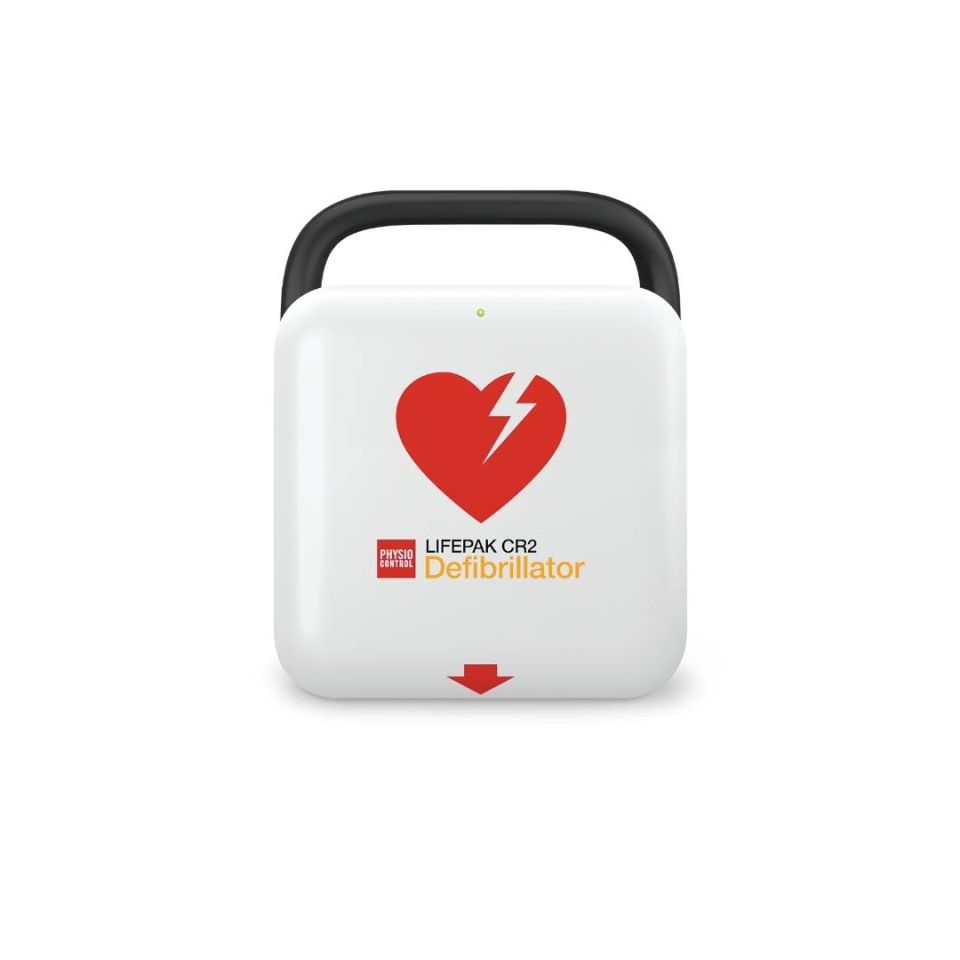 Lifepak CR2 Defibrillator - Semi Automatic with Wi-FiInc.VAT £1,606.80 £1,339.00
-
 Lifepak CR2 Fully Automatic Defibrillator with WiFi and Locked Outdoor Cabinet - GreenInc.VAT £2,478.00 £2,065.00