
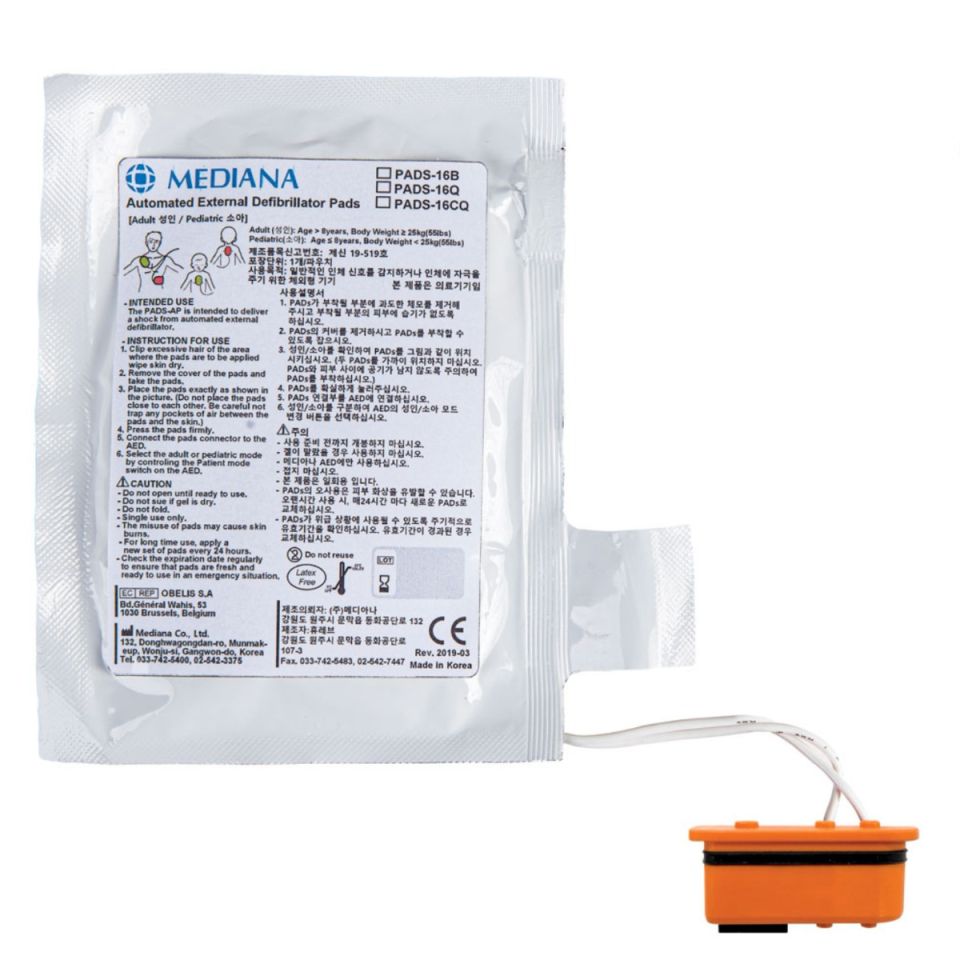
Mediana A16 Universal Defibrillator Pads (Adult & Child)
You've invested in a Mediana HeartOn A16 defibrillator. You've trained your team. You've mounted it in a visible location. But there's one thing that can render all that preparation useless: expired or faulty electrode pads.
These replacement pads are designed specifically for the Mediana A16 (both semi-automatic and fully automatic models). More importantly, they're the kind of pads you can trust in an emergency, and here's why that matters.
The "One Pad Set for Everyone" Advantage
- Schools only need one spare set of pads, not two
- Community defibrillators stay simpler to use for untrained bystanders
- You save money (roughly £30-50 per replacement cycle)
Mediana A16 monitors the pads daily
The Mediana A16 constantly checks whether your pads are still good. It monitors:
- Whether they've expired
- If the gel has dried out (which stops it from conducting electricity properly)
- Connection issues
- Physical damage
You'll get an alert if anything's wrong, usually via the device's indicator lights or self-test notifications. This is genuinely useful because adhesive gel degrades over time, sometimes before the printed expiry date.
1.8m Cable Length
The 1.8m cable length of the Mediana A16 pads isn't just a specification; it's a practical consideration.
When someone collapses. You'll likely need the defibrillator on the floor next to them, you'll be doing chest compressions (or someone else will), and you need room to position the pads without the device getting in the way.
1.8 metres gives you that flexibility. Shorter cables force you to place the device on or very close to the patient, which can complicate CPR.
Pre-Connected Pads
You can keep these pads connected to your Mediana A16 during storage. When you open the case, they're ready. No connecting cables with shaking hands.
Mediana A16 electrode shelf life
Official shelf life is up to 3 years, depending on your specific model (check your device manual). In practice, storage conditions matter enormously. The environmental specs say 0-43°C, but aim for a stable room temperature when possible.
Specific Use Cases
Schools & Nurseries
You've got everyone from tiny reception kids to adult staff and visitors. The mode switch means teachers don't need to make a medical judgment about which pads to use, they just switch based on obvious age/size and let the device handle the rest.
GP Surgeries & Clinics
You need reliable equipment and hate inventory complexity. The quality monitoring feature means you can trust the device will alert you during routine checks, rather than manually testing pads constantly.
Technical Specifications
| Mediana A16 Pads | Details |
|---|---|
| Shelf life | upto 3 years |
| Energy Output |
Adult :170 to 195 joules (±5%) Child: 44 to 51 joules (±5%) |
| Cable length | 1.8 metres |
| Pad placement |
Adults: one pad upper right chest, one lower left side Children: one pad centre of chest, one centre of back |
| Special Functions | Pacemaker detection and filtering |
| Storage conditions |
Keep sealed. Store 0-43°C, humidity 5-95% (Aim for stable, cool, dry conditions) |
| Active gel area | 80cm² (ensures good electrical contact) |
| Can you pre-connect them? | Yes, saves time in emergencies |
| Single use? | Yes, replace after every use, even if shock wasn't delivered |
Frequently Asked Questions
What's the difference between anterior-lateral and anterior-posterior placement?
- Anterior-lateral (adults): One pad on the upper right chest, one on the lower left side, this is the standard position most people learn.
- Anterior-posterior (children): One pad on the front of the chest, one on the back, this works better for small bodies and ensures the shock passes through the heart effectively.
Your Mediana A16's voice prompts and the diagrams on the pads themselves will guide you.
Do I need to buy anything else when I order these?
Just the pads. They come pre-gelled and ready to use. However, consider whether you need other consumables like rescue masks, razors (for very hairy chests), or an AED sign to place in a public setting.
When should I replace AED pads/electrodes?
- Immediately after use -Even if the shock wasn't delivered, the pads have been exposed, and the adhesive is compromised.
- Ideally, replace pads before their expiry date—this is essential for safety and compliance. We recommend ordering replacement pads at least three weeks prior to expiry. This ensures timely delivery and gives you a buffer in case of supply delays or the need to arrange alternatives.
- If your device alerts you- The quality monitoring system has flagged a problem. Investigate and replace if necessary.
- If the packaging is damaged- Torn pouches mean the gel may have dried out or been contaminated.
- If they've been stored badly -Found them in a scorching hot car boot or freezing shed? Replace them. The environmental extremes will have affected the gel.
| Brand | Mediana |
|---|