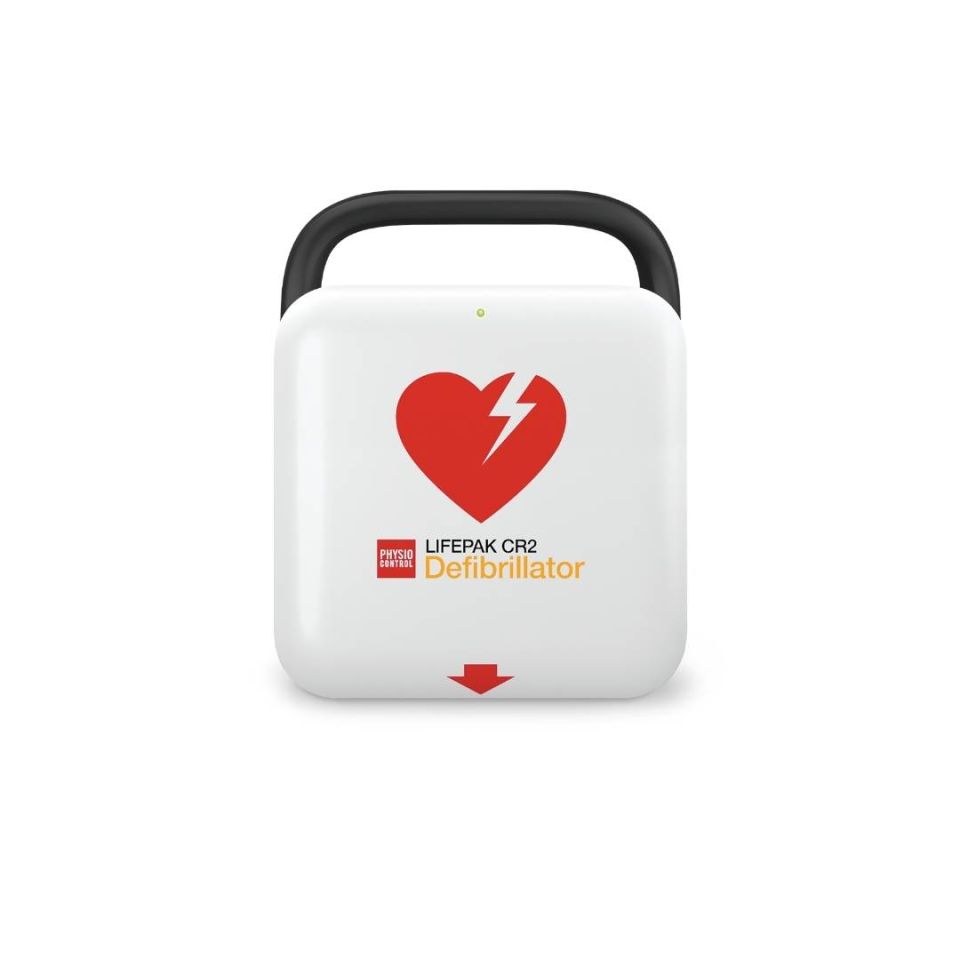
Lifepak CR2 Semi-Automatic Defibrillator with USB
The LIFEPAK CR2 Semi-Automatic with USB is built for organisations that take emergency preparedness seriously. Manufactured by Stryker (formerly Physio-Control), this AED combines clear voice guidance, real-time CPR coaching, and escalating shock energy up to 360 joules, giving everyday people the confidence to respond when it matters most.
This is the USB data transfer variant, designed for organisations that want reliable post-event data retrieval without the ongoing cost of a Wi-Fi or cellular connection. Event data is downloaded to a computer via the included USB cable, ready for ambulance services or your internal records. If you are looking to buy a defibrillator that balances advanced capability with straightforward, cost effective operation, the CR2 USB is a strong choice.
The LIFEPAK CR2 is the direct replacement for the now discontinued LIFEPAK CR Plus range. If your organisation previously used a CR Plus and is looking for an upgrade, the CR2 delivers significant improvements in speed, guidance, and durability while maintaining the same trusted Physio-Control pedigree.
The Physio-Control LIFEPAK CR2 defibrillator (also known as the LP CR2 or Stryker CR2) is one of the most widely specified AED defibrillator machines in UK public access and workplace settings.
For more information on this defibrillator, or to find out about how we can combine this device into a money-saving package deal for you, please contact one of our Defib Experts using the web chat, or give us a call on: 01298 872 186
Key Features of the CR2 (USB version)
Guides any responder, step by step
Open the lid, follow the bold graphics and spoken prompts. ClearVoice technology adjusts volume to the environment, so instructions stay audible in a noisy school corridor or gym hall. We consistently hear from customers that the CR2 is one of the devices their staff feel most confident using.
CPR coaching with real-time correction
A built-in metronome sets the compression pace, and the device provides spoken feedback on technique and depth. It detects when CPR has stopped and prompts the responder to resume. For workplaces where most staff have limited first aid training, this makes a material difference.
Escalating energy up to 360J
The CR2 delivers shocks at 200J, 300J, then 360J automatically, no decision required. Higher energy increases effectiveness for patients who are more difficult to defibrillate or show more impedance.
One set of pads for adults and children
The QUIK-STEP electrode pads work for both adult and paediatric patients. Press the Child Mode button to reduce energy (50J / 75J / 90J) and adjust prompts for children aged 1-8 or under 25 kg. No separate paediatric pads to buy, store, or fumble with mid-emergency. Particularly valued in schools and sports clubs.
Semi-automatic, the responder presses the shock button
The device analyses the rhythm and advises when a shock is needed, but the responder delivers it. Many organisations and training providers prefer this because it keeps the responder engaged and aligns with standard first aid protocols.
USB data transfer for post-event reporting
After use, connect the USB cable to a computer to download ECG recordings, shock times, and responder actions. Ambulance services routinely request this data, and it supports your internal incident records. No Wi-Fi infrastructure or subscription required.
Self-testing and readiness monitoring
Daily, weekly, and monthly automatic checks verify battery, pads, and internal components. A green LED flashes every six seconds to confirm the device is ready. If something needs attention, the indicator changes so you can act before an emergency.
Built tough, built compact
IP55 rated against dust and water. 2 kg, 9.7 × 22.6 × 27.4 cm. The white casing with distinctive red heart logo is designed for high visibility. It has been tested to survive sudden, harsh impacts. It combines a specific, high-intensity shock test (IEC) with a widely recognised military-grade durability standard (MIL-STD). This is a defibrillator machine built for real-world conditions, not a shelf.
Technical Specifications
| Manufacturer | Stryker (formerly Physio-Control) |
|---|---|
| Model | LIFEPAK CR2 Semi-Automatic — USB (LP CR2) |
| Operation | Semi-automatic (user-initiated shock) |
| Connectivity | USB (micro-USB for data transfer) |
| Waveform | Biphasic Truncated Exponential with impedance compensation |
| Adult Energy | 200J / 300J / 360J (escalating, configurable 150–360J) |
| Paediatric Energy | 50J / 75J / 90J (via Child Mode button) |
| Time to Shock (semi-auto) | < 17 seconds after pads applied |
| First Shock Charge Time | 0 seconds (pre-charged) |
| ECG Analysis | Shock Advisory System™ |
| CPR Feedback | Metronome, rate/depth guidance, hand placement prompts |
| Voice Prompts | ClearVoice™ adaptive volume |
| Electrode Pads | QUIK-STEP™ dual adult/child (up to 4-year shelf life) |
| Battery | Li/MnO₂, 12.0V, 4.7Ah — 166 shocks at 200J or 800 min operating time |
| Battery Standby Life | Up to 4 years. At least 6 shocks remain at first replace indicator. |
| Self-Testing | Daily, weekly, monthly automatic checks |
| Readiness Indicator | Green LED flashing every 6 seconds |
| IP Rating | IP55 (dust-protected, water-jet resistant) |
| Weight | 2.0 kg (with battery and pads) |
| Dimensions | 9.7 × 22.6 × 27.4 cm (H × W × D) |
| Operating Temp | 0°C to 50°C |
| Storage Temp | -30°C to 60°C (long-term: 15°C to 35°C) |
| ECG Storage | Min 60 min across 2 patient episodes (flash RAM) |
| Patient Impedance | 10–300 ohms |
| Humidity | 5–95% non-condensing |
| Safety Standard | IEC 60601-1 / EN 60601-1 |
| Shock/Vibration | IEC 60068-2-27 (40g, 11ms) / MIL-STD-810G |
| Compliance | UKCA, UK MDR, FDA cleared |
| Warranty | 10 years (Defibstore) | 8 years (manufacturer standard) |
Where the CR2 is Used
We supply the CR2 USB to organisations of every size, from single-site offices to some of the busiest locations in the country. The LIFEPAK CR2 is trusted in high-footfall environments, including major UK airports such as Heathrow, where devices are kept on standby as part of their emergency response provision.
We also work with the Oliver King Foundation, whose founder, Mark King OBE, has been one of the most influential advocates for public-access defibrillation in the UK. The Foundation’s campaigning led directly to the government’s rollout of over 20,000 defibrillators to state funded schools across England, a programme that has already saved lives. Their trust in the LIFEPAK CR2 reflects the same standard of readiness we help every customer achieve.
Schools, workplaces, sports clubs, councils, GP surgeries, care homes, leisure centres, the CR2 USB fits wherever an organisation takes its duty of care seriously and needs dependable equipment without the complexity of wireless connectivity
Readiness and Replacement
Pads and batteries each last up to four years. When the battery-replace indicator appears, at least six shocks and thirty minutes of operating time remain, giving you time to order a replacement without any gap in cover.
Our free reminder service contacts you before consumables expire. Replacement LIFEPAK CR2 pads and batteries are available from Defibstore, and we offer servicing and maintenance support for organisations that want hands-off compliance.
Not ready to purchase outright? We also offer rental defibrillator options for events, seasonal venues, or organisations that prefer to spread the cost
Replacing a LIFEPAK CR Plus?
The LIFEPAK CR Plus has been discontinued. The CR2 is its direct replacement from Stryker, with significant upgrades: faster shock delivery, ClearVoice adaptive audio, built-in CPR coaching, a dedicated child mode button (no separate paediatric pads needed), IP55 protection, and USB data transfer. If your organisation still has a CR Plus, this is the recommended upgrade path.
FAQs
Is Lifepak CR2 rechargeable?
No, the CR2 is not rechargeable. The device battery can be replaced with a new CR2 replacement battery that has a battery life of up to 4 years.
What is the difference between the LIFEPAK CR2 semi-automatic and fully automatic?
The semi-automatic analyses the heart rhythm and tells you when a shock is advised; you then press the shock button. The fully automatic delivers the shock without a button press. Many organisations and training providers prefer the semi-automatic because it keeps the responder actively engaged and matches standard AED training.
Is it suitable for outdoor use?
The CR2 is IP55 rated, meaning it’s protected against dust and low-pressure water jets. It’s suitable for outdoor placement in an appropriate weatherproof cabinet.
Is a defibrillator required in schools?
The government rolled out over 20,000 defibrillators to state-funded schools in England, and Ofsted increasingly recognises health and safety preparedness as part of safeguarding. While not a legal requirement in all settings, having an AED on-site is widely considered best practice. The CR2’s child mode and CPR coaching make it particularly well suited to school environments.
How does the CR2 check itself?
Automatic self-tests run daily, weekly, and monthly, verifying battery, pads, and internal components. A green LED flashes every six seconds to confirm readiness. If a fault is detected, the indicator changes so it can be resolved before an emergency.
Did your LIFEPAK save a life?
Through Stryker's Forward Hearts programme, the survivor can donate a brand-new LIFEPAK CR2 (semi- or fully-automatic) to a charity or organisation of their choice. Programme details - > Forward Hearts | Stryker
| Brand | Stryker |
|---|
-
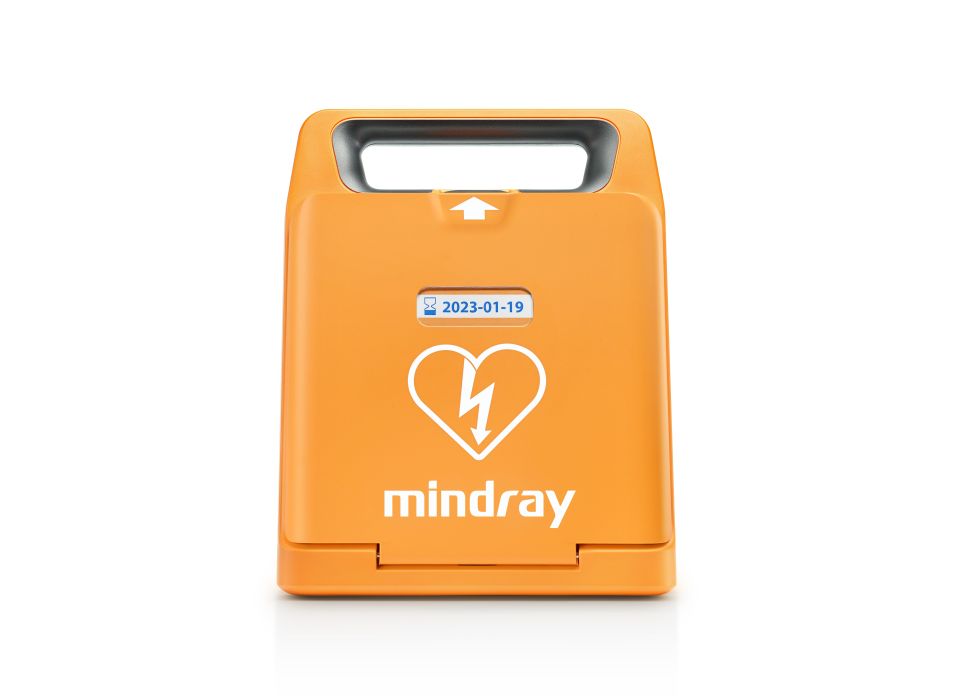 Mindray BeneHeart C1A semi automatic defibrillatorInc.VAT £1,020.00 £850.00
 -
Mindray BeneHeart C1A fully automatic defibrillatorInc.VAT £1,020.00 £850.00